Legendary Opel RAK 2 features rocket power
The Opel RAK 2, which is starring in GM’s display at this year’s Goodwood Festival of Speed, June 25-27, is a stunning example of automotive ingenuity and engineering at its best.
After abandoning motorcycle racing in 1923, Fritz von Opel, grandson of the company’s founder, spent the majority of his time obsessing over rocket propulsion and its potential use in vehicles. Rocket technology was becoming increasingly disreputable and the only rockets still used were firework rockets, hail rockets for agriculture and rescue rockets used to fire ropes to stranded ships from land.
After a chance visit from fellow rocket enthusiast and engineer Max Vallier in 1927, the two developed a close cooperation to further develop the new technology. Vallier promised Opel that one day a rocket-powered racing car would achieve 500 km/h and that the same engines could potentially drive aircraft to speeds faster than sound. Their mutual enthusiasm was palpable, and eventually they found a suitable partner to supply rocket components for experimentation.
Wilhelm Sander, who owned a company that produced signal rockets and rocket-powered distress breech buoys, was also motivated by the prospects of the technology for use in vehicles. It was not long before the venture produced its first successes, after a number of top-secret test drives. The first official run of a rocket car took place on the Opel track south of Russelsheim, on April 11, 1928. The “RAK 1” prototype reached the 100 km/h mark within 8 seconds. The demonstration in front of the international press was a complete success.
Even more impressive was the record debut drive of the newly christened RAK 2, which rolled out onto the Avusring in Berlin on May 23. It measured in at a remarkable 5 meters long, with two colossal wings with a negative angle of incidence designed to compensate for negative lift. With a kick of the foot pedal, Opel fired up the 24 powdered-fuel rockets (compared with “just” 12 rockets in the RAK 1) and 120 kilograms of explosives, which catapulted the RAK 2 to more than 230 km/h. The demonstration was an unqualified success. Further experiments followed, with RAK 3, 4 and 5 prototypes, leading eventually to Opel’s ultimate dream of a rocket-powered aircraft – which he piloted in the fall of 1929, reaching speeds of more than 150 km/h.
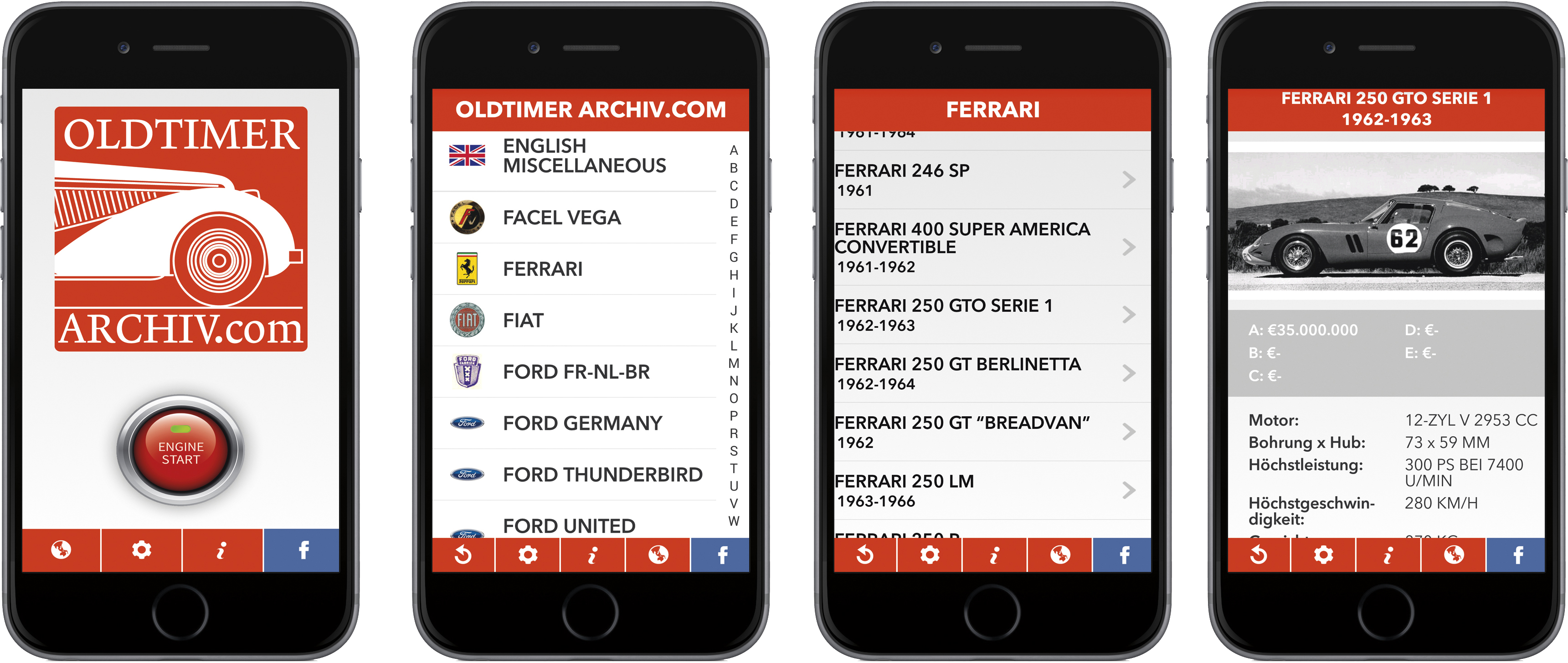 Möchten Sie die technischen Daten und / oder den aktuellen Wert aus diesem Auto?
Dann laden Sie die OldtimerArchiv.com App.
 Interessenten aus der Schweiz bestellen bitte direkt bei