Honda celebrates the “double forty” at Goodwood
In 1965 Honda competed in its first full year of Grand Prix motor racing. Coincidentally this was the year that the official British import subsidiary of the Japanese company, Honda (UK), was created. So 2005 marks this double milestone. It’s also the eighth consecutive year that Honda has participated in the world’s premiere historic motor sport event – The Goodwood Festival of Speed.
Honda will field its biggest ever entry of no fewer than five Formula 1 cars (including a contemporary B·A·R Honda) plus nine Grand Prix racing motorcycles. And there will be a galaxy of Honda’s racing heroes – past, present and future – to put them through their paces.
As this year’s feature marque and one of the main sponsors of the event, Honda will command the spectacular central display. Positioned on the lawn in front of Goodwood House, this will be used to display the largest and finest collection of Honda racing cars and bikes yet seen outside Japan.
The 2005 event marks the return to Goodwood of Honda’s historic GP cars. This year the company fields two of the V12 racers from the 60s – the rarely seen 1.5 litre RA272 with which the company won its very first car GP, plus the RA300 from the early 3.0 litre era. Also representing the same period is the Brabham-Honda BT18, which won 11 consecutive races during the 1966 F2 season. From the 80s Honda fields the one thousand horsepower 1.5 litre turbocharged Williams Honda FW11s as driven by Piquet and Mansell, as well as the Championship winning McLaren MP4/4. And finally, Honda will demonstrate a contemporary B·A·R Honda, which has evolved into one of the most consistently successful F1 cars of the modern era.
The sextet of cars is joined by nine GP motorcycles – represented by the 50, 125, 250, 350 and 500cc machines, all from the 60s, as well as later V4 500cc two-strokes from the 80s and 90s. And to bring the display right up to date, Honda will include the RC211V four-stroke V5 racer from the current Moto GP era.
The display of victorious machinery arrives in the UK directly from The Honda Collection Hall in Japan. Designed to be a living history, The Collection Hall is a state-of-the-art three-storey museum situated in Motegi dedicated to the company’s rich history of innovation, racing passion and engineering excellence.
This year is Honda’s eighth at Goodwood, the event having become an annual pilgrimage for The Collection Hall team from Japan. The team participates because of the event’s high quality and profile – and because of Honda’s special relationship with the UK.
Success on two wheels …
Honda’s motor sport history is as old as the company itself, for as long ago as 1923 the then 17-year old Soichiro Honda was involved in the development of a Curtiss-engined racing car – which he co-drove to victory in the machine’s first race, at Fifth Japan Automobile Competition. After that, Soichiro would never lose his enthusiasm for motor sport.
It was in 1954 that Honda first announced its intention to compete in the Isle of Man TT race – and five years later a team of five riders arrived on the island with 125cc RC141 and RC142 four-stroke twins. Although the Honda riders were outpaced, they did manage to finish sixth, seventh, eighth and tenth, earning the team the Constructors’ Prize.
Since then, the company has established a proud record of achievement in many different motorcycle events – and achieved its 500th motorcycle GP victory as long ago as 2001. The driving force for this success has been Honda’s determination, as evidenced by its technology and products, to meet and conquer every challenge.
Today, Honda Racing Corporation is a team of specialists bonded by their dedication to motorcycle sports. The company combines participation in motorcycle races throughout the world with the development of high potential racing machines. Its racing activities are an important source for the creation of leading edge technologies used in the development of Honda motorcycles.
The UK is an important market for Honda Racing. Honda UK has supported and enjoyed success in leading motor sport championships for many years. Honda Racing is now the official team name for its entry in the British Superbike and Supersport championships, the British and World Motocross Championships, British Supermoto Championship and its own Honda Formula 4-Stroke Offshore Powerboat series. No other manufacturer has promoted such a diverse product range so efficiently and enjoyed the success that Honda Racing has achieved over the past 40 years.
Honda Racing also makes a positive contribution to the advancement of motorcycle sports through a range of activities that includes sales of production racing motorcycles, support for satellite teams and rider education programmes.
… and four
Having already earned itself a reputation as a world-class motorcycle manufacturer by achieving outstanding results in the Isle of Man TT and other races, Honda was keen to develop passenger car technologies through competition and started preparing for the challenges of Formula One in the early 1960s.
The exciting project started to take shape in 1963 and by the end of the year Honda had fitted its experimental 1.5-litre RA270E to a steel-tube space frame chassis of its own design. This chassis had been built purely for testing, as Lotus had secured a deal to run the engine in the following year’s championship.
However, in February 1964 the British team dropped out of the project forcing Honda to choose between postponing its entry into F1 or operating its own engine, chassis and race team. Encouraged by its early progress and willing to rise to the titanic challenge, Honda was determined to press ahead.
A new RA271E was prepared for the fast-approaching season together with an all-new state-of-the-art monocoque chassis constructed from aluminium panels. In an early example of technical ingenuity that would become the hallmark of all Honda’s F1 engineering efforts, the load-bearing V12 engine was installed transversely into the chassis.
The first Honda F1 car made its Grand Prix debut on the daunting 22-kilometre Nürburgring circuit in early August with Ronnie Bucknum at the helm. The young American held a top 10 position before being forced to retire with suspension damage. A month later Bucknum underlined the RA271’s potency by running as high as fifth on the famously fast Monza circuit before overheating and braking problems interrupted progress up the leader board. Another non-finish was recorded in the American Grand Prix.
Learning the lessons gleaned from its first three Grands Prix in 1964, Honda’s engineers laboured hard through the off-season to overcome their lack of four-wheeled racing experience. The team was eager to capitalise on the potential advantages afforded by the advanced RA271 engine which with a maximum horsepower of 230bhp was producing more than 10 per cent greater power than any of its rivals.
To boost the team’s chances of success, the experienced Richie Ginther was signed to partner Bucknum in a two car attack. The Californian’s arrival started to produce results – Ginther scored Honda’s first World Championship point at Belgium’s legendary Spa-Francorchamps circuit in June and led both the British and Dutch Grands Prix.
First F1 win
The final race of the season and of the 1.5-litre regulations was staged in Mexico – it was a landmark event for Honda too. Ginther grabbed the lead at the start and kept the opposition at bay to record Honda’s maiden F1 victory on only its 11th outing. Adding to the celebrations, Bucknum finished a fine fifth.
The three litre era
Development of an all-new engine and chassis for the 1966 season began immediately after Honda’s breakthrough F1 victory in Mexico. Having considered both V12 and V16 layouts to meet the new 3-litre regulations, Honda’s engineers opted for the 12-cylinder alternative.
Once again the engine boasted more power than its rivals but the new machine was handicapped by being considerably overweight. Despite this Ginther ran second on its debut in Italy until a tyre burst and was looking good for a comfortable third in America before gearbox gremlins prevented a podium finish.
For 1967, Honda focused its energies on a single car entry for Englishman John Surtees – the only man ever to win World Championships on both two and four wheels. Surtees scored three top six points-scoring finishes in the first six races of the season before the sensational introduction of the brand new RA300 at Monza in September.
After an epic battle with Jim Clark (Lotus-Cosworth) and Jack Brabham (Brabham-Repco), Surtees surged through to record a famous victory by just two-tenths of a second. After the dramatic victory in its maiden race, Honda continued with the RA300 for the remainder of the 1967 season.
The company proved itself to be among the F1 elite by securing fourth place in the Constructors’ Championship with Surtees also claiming fourth place in the Drivers’ Championship. Based on these improving results, optimism ran high for Honda’s fifth season on the Grand Prix grid.
To take the team to greater heights Honda developed a new chassis, the RA301. The car featured a tougher, full-length monocoque and was considerably lighter than its forebear thanks to the extensive use of magnesium. The RA301’s water-cooled V12 engine was extensively redesigned in the search for greater power.
However despite proving more than a match for its rivals on several occasions, the RA301 was plagued by misfortune. Mechanical problems prevented top three finishes in Spain and Monaco before a suspension failure robbed Surtees of certain victory in Belgium.
The team had to wait until France to score its first points when Surtees finished second. The Englishman qualified on pole position (Honda’s first) and led at Monza until crashing when avoiding a spinning car and led again at the season finale in Mexico until retiring with tyre problems.
The following season proved less successful, with Surtees finishing no better than seventh in the Drivers’ Championship. Tragically the Englishman’s best result – a second place in the French Grand Prix – was marred by the death of the French driver Jo Schlesser who was making his debut in the RA302.
Many of the problems in 1968 resulted from Honda’s brave decision to pursue simultaneous development of two completely different cars. To help promote and market the company’s new range of air-cooled road cars Honda instructed its engineers to design an air-cooled F1 engine. A V8 format was selected and a lightweight RA302 chassis was specially designed to meet the needs of the new air-cooled unit.
Honda’s engineers were keen to banish their disappointments in the 1968 season and redress the balance in 1969. In August work started on an all-new car to be equipped with a lightweight and compact water-cooled V12.
However, within weeks, Honda announced its ‘temporary withdrawal’ from Grand Prix racing. The company’s racing activities were to be put on hold for 15 years as Honda concentrated its efforts and resources on new challenges.
During its six-year adventure in Formula One, the company had grown unrecognisably as a producer of passenger cars and it was now preparing its plans to become a leader in the compact car market. Many of the skills absorbed from the original F1 programme would prove beneficial to the development of Honda’s road cars throughout the years that followed.
The 80s return
Having established itself among the world’s premier automotive manufacturers, Honda fulfilled its departing promise made in 1968 by re-entering Grand Prix racing in 1983. The prime mover behind the new project was Nobuhiko Kawamoto, whose sole objective was to capture the World Championships that had eluded Honda during the 1960s.
During the company’s 15-year absence, however, the F1 world had evolved almost beyond recognition. Honda’s return to F1 coincided with the zenith of the turbocharged era which superseded the 3-litre normally aspirated generation of Grand Prix cars that Honda and others had pioneered back in 1966.
During its first F1 programme, Honda had taken on the technical and financial burden of producing both engine and chassis in-house. By the time the company was evaluating a return to F1 in the early 1980s, there was the very attractive alternative of finding an established British race team to provide the chassis.
Honda gained confidence in the merging of Japanese and European racing cultures via a highly successful relationship with the Ralt Formula 2 team for whom Honda supplied 2-litre V6 engines. So, when the company officially announced its re-entry into F1 during the autumn in 1981, it was to be exclusively as an engine supplier.
The Turbo era
The prototype of Honda’s first turbocharged F1 engine, designated RA163E, was installed in a modified Spirit F2 chassis. The hybrid ran for the first time at Silverstone in November 1982 heralding Honda’s return to F1.
Following more development work, the Spirit-Honda made its debut in a non-championship F1 race at Brands Hatch in April 1983 and its full Grand Prix debut at the British Grand Prix in July. In the hands of Stefan Johansson, the car contested five further Grands Prix finishing seventh in Holland and showed enough promise for Honda to secure a contract to supply engines to the front-running Williams team.
To speed up development, a pair of Honda powered FW09s were hastily prepared for the final round of the season in South Africa and Keke Rosberg wasted no time proving the potential of the exciting new partnership. The Finn claimed fifth place to record Honda’s first points of its second era in F1.
In 1984, Honda’s technicians were faced with a new challenge as the F1 authorities introduced a fuel tank capacity limit of 220 litres along with a ban on mid-race refuelling. These stringent new regulations, aimed at constraining ultimate horsepower, forced engineers to marry efficiency with potency.
In order to gain a competitive edge, it became necessary for Honda’s engine builders to decrease the weight of internal moving parts, to minimise frictional losses and to optimise fuel consumption through the use of ever more sophisticated electronic control systems.
For its first full season with Williams, Honda produced the RA164E – a heavily revised version of the RA163E. Despite some early problems largely associated with the enormously high temperatures produced by the forced induction, Rosberg scored Honda’s first Grand Prix victory since 1967 on the streets of Dallas in the USA.
An all-new RA165E engine was introduced mid-way through the following season and immediately received positive reviews from Rosberg and team mate Nigel Mansell. The pair both claimed top six finishes on the new engine’s debut in Canada and Rosberg took the chequered flag at the next Grand Prix in Detroit to record the second victory for a Honda turbo V6. Mansell and Rosberg won the final three races of the season to establish Williams-Honda as the team to beat in 1986 when Nelson Piquet would replace the Finn.
First World Championship
For 1986, a new RA166E engine was introduced to meet the demands imposed by a further lowering of fuel tank capacity limit from 220 litres to 195 litres. The new Williams-Honda FW11 dominated the championship with Mansell and Piquet taking nine wins between them to secure the Constructors’ Championship for Williams-Honda with one round remaining. The Drivers’ Championship, however, eluded Honda when Mansell suffered a spectacular rear tyre blow-out in the final race.
With the latest turbocharged engines now producing well in excess of 1000bhp (from just 1.5-litres), the sporting authorities sought to counter the ingenuity of F1 engine manufacturers by limiting boost pressure to 4 bar for the 1987 season.
This again forced Honda’s technicians to seek new solutions… which they did successfully. With engines now being supplied to Lotus as well as Williams, Honda-powered cars took victory in 11 of the year’s 16 races. The high point came at Silverstone where the Honda-powered cars of Mansell, Piquet, Ayrton Senna and Satoru Nakajima completed a 1-2-3-4 clean-sweep.
First Drivers’ Championship
Piquet finally clinched the Drivers’ Championship at the penultimate round at Suzuka, the first Japanese Grand Prix in a decade. The Brazilian’s title was the first for a driver powered by a Honda engine and, at the same time, Honda had achieved its long-held ambition of victory in both the Drivers’ and Constructors’ World Championships.
Restrictions on turbocharged engines were further tightened for the 1988 season with boost pressure cut from 4 to 2.5 bar and fuel tank capacity reduced from 195 to 150 litres. With a new 3.5-litre normally aspirated formula due for introduction in 1989, Honda set-up a separate project to concentrate on the creation of a new ‘atmo’ engine. However, for 1988, Honda’s engineers were determined to end the turbo era on a high note by competing with a new RA168E turbo engine designed to overcome the latest fuel-efficiency constraints.
Domination with McLaren
Having ended its relationship with Williams at the end of 1987, Honda joined forces with McLaren as well as remaining with Lotus for 1988. The first ever McLaren-Honda – the MP4/4 – was an innovative machine and the new combination’s dominance was total. An almost perfect record established the MP4/4 as the most successful car in F1 history.
Between them, Alain Prost and Ayrton Senna won 15 of 16 rounds with the Brazilian finally clinching his first world title after a heroic season-long duel with his French team-mate. The McLaren-Honda team broke many records during the final season of the turbocharged era, scoring an unprecedented 199 points and recording no fewer than ten 1-2 finishes.
To meet the new-for-1989, 3.5-litre normally aspirated engine regulations, Honda designed a brand new RA109A V10 engine for reigning champions McLaren. Only Renault and Honda opted for the novel 10-cylinder configuration though others were soon to follow suit. McLaren prepared a new MP4/5 chassis and the formidable duo of Senna and Prost were once again contracted to drive.
Despite the challenging new regulations, McLaren-Honda’s winning ways continued – the team won 10 of 16 races with Prost taking the title. For the third consecutive year, Honda claimed both the Drivers’ and Constructors’ Championships.
Not wanting to sit on its laurels, Honda’s renowned engineers incorporated many innovations into a new RA100E engine for 1990. With Prost leaving for Ferrari, Gerhard Berger lined up alongside Senna in a pair of revised MP4/5B chassis.
Although Ferrari mounted a serious attack, the result was another successful campaign for Honda which saw Senna reclaim the Drivers’ Championship and Honda take its fifth Constructors’ Championship on the trot.
Honda’s constant search for areas of possible improvement based on rigorous assessment of its own achievements and comparisons of its performance with that of its closest rivals, led the company to design a new V12 engine for McLaren in 1991. An upgraded version of the championship winning V10 would be provided to Tyrrell.
Badged RA121E, the new V12 propelled McLaren’s latest MP4/6 to victory in the year’s first four Grands Prix. In total Senna scored seven wins on the way to his third Drivers’ Championship with Honda in four years. With Berger winning in Japan, Honda clinched the Constructors’ Championship for the sixth successive season.
A major update of the RA121E engine was introduced for McLaren in 1992 but by now Williams had gained a major competitive edge through the introduction of active suspension, coupled with a semi-automatic gearbox and other computer-controlled features.
Honda responded by increasing power but despite Senna winning three races and Berger two – including the season finale in Australia – for the first time since 1987 the World Championship would not be won by Honda power.
Long before the title had been lost, Honda’s management had already taken the major decision that 1992 was to be the last year of Honda’s second period of participation in Grand Prix racing. Berger’s victory in Australia was the company’s 71st win in the last race of Honda’s second F1 adventure.
The current era
Jacques Villeneuve (Canada) and Ricardo Zonta (Brazil) carried the Honda banner in 2000, the first year of Honda’s return to F1. Villeneuve recorded seven points-scoring finishes while Zonta, in his debut year, finished in the points three times. The year kicked off in style as Jacques and Ricardo brought home their B·A·R Hondas in fourth and sixth places respectively at the season-opening Australian Grand Prix.
The following year, Villeneuve teamed up at B·A·R Honda with Frenchman Olivier Panis, while the new Honda partner team of Jordan Honda fielded Germany’s Heinz-Harald Frentzen (replaced by Ricardo Zonta in the German Grand Prix and
then Jean Alesi in the final five races) and Italian Jarno Trulli. Between them, the Jordan Honda pilots racked up a total of nine points-scoring finishes, while the B·A·R Honda pairing of Villeneuve and Panis finished in the points on five occasions.
The Canadian took the honour of scoring Honda’s first podium of its third generation in the 2001 Spanish Grand Prix, following it up with another third place in the German GP of that year.
In 2002, while B·A·R Honda maintained its driver line-up, it was all change at Jordan Honda, who paired the experienced Italian, Giancarlo Fisichella, with the Japanese prodigy, Takuma Sato. A product of Honda’s Suzuka Racing School, Sato graduated to F1 from a sweeping British F3 Championship victory. Honda’s four F1 drivers together tallied nine points-scoring finishes, with Fisichella enjoying a strong run of form in mid-season, with three consecutive fifth place finishes in the Austrian, Monaco and Canadian Grands Prix.
Changing the focus for 2003, Honda chose to provide engines exclusively for B·A·R, and for the first time became an official B·A·R sponsor – a clear sign of the increased collaboration between the two partners. Honda’s name was carried once again by Villeneuve who was joined by a new team-mate in Englishman Jenson Button. Entering his fourth year of Formula One and already marked as a potential future champion, Button made his mark at the team by finishing the season with 17 points, 11 more than his World Champion team-mate.
2004 was Honda’s 20th year in Formula One, spanning three distinct generations since its 1964 debut. The season presented a particularly exciting technical challenge with new regulations requiring drivers to use the same engine for an entire Grand Prix weekend.
Button remained at the team for 2004, with 2003 test-driver Takuma Sato taking up a race seat once again (though Sato had also scored three World Championship points in his B·A·R Honda race debut at the 2003 Japanese Grand Prix).
The year will be remembered for B·A·R’s consistent front running performances, the only team to get consistently close to the winning red cars.
For British race fans, Button’s exploits were a particular source of pride and excitement. The run of success began with a maiden pole position for the English driver at Sepang, followed by nine others over the rest of the season – including a memorable drive from 13th on the grid up to second place in Germany.
Sato’s season was certainly spectacular – a mix of raw pace, outrageous overtaking manoeuvres and frustrating mistakes. It included a high point podium place at the US Grand Prix, but the Japanese driver suffered more retirements and lacked the consistent pace of his team mate.
Button eventually ended the season third in the Drivers’ Championship with Sato eighth. But the combined points earned by the drivers elevated B·A·R to second in the constructors’ title, the first time that a team has finished so high without winning a race.
B·A·R HONDA looks forward to 2005
Following its most successful season to date, Lucky Strike B·A·R Honda embarks on 2005 with renewed determination to pursue its goal of winning the FIA Formula One World Championship. Confidence within the team is high as November 2004 saw Honda increase its commitment to both B·A·R and Formula One by announcing its intention to become an equity partner in the team, complementing its existing status as engine supplier, chassis development partner and major sponsor.
For 2005 Nick Fry has been newly appointed B·A·R Honda Chief Executive Officer, with Geoffrey Willis continuing as the team’s Technical Director. Honda has also added a number of key personnel to the team to strengthen the unity already established during the past few years.
The driver line-up of Jenson Button and Takuma Sato, supported by test drivers Anthony Davidson and Enrique Bernoldi, affords B·A·R Honda the benefit of consistency as well as experience of the car and the team’s operational style.
Honda in the UK
Honda (UK) is the marketing arm of Honda responsible for selling the company’s car, motorcycle and power equipment products in the Britain.
The company was established in 1965 at 4 Power Road Chiswick as a wholly owned subsidiary of Honda Motor Company, Japan. Since 1991 it has become a division of Honda Motor Europe Ltd, originally based in Reading. In 2000, both Honda (UK) and Honda Motor Europe moved to a new purpose designed building situated just off junction 5 on the M4, at Langley, Slough.
Under Managing Director Ken Keir, Honda (UK) currently employs 350 people and is responsible for some 200 car dealers, 153 motorcycle dealers and 330 Lawn and Garden and generator dealers, 68 Marine dealers and 107 ATV Dealers.
Sales this year are expected to total 100,000 cars, 25,000 motorcycles and scooters, 65,000 power products, 3500 Marine and 4400 ATVs.
Honda’s European car plant (Honda of the UK Manufacturing Ltd) was commissioned in 1992, initially building Accord and Civic models for Europe. Last year the plant built some 193,000 Civic and CR-V models, with the cumulative total
now exceeding 1.3 million. Later this year HUM will commence building the all new 8th generation version of the Civic.
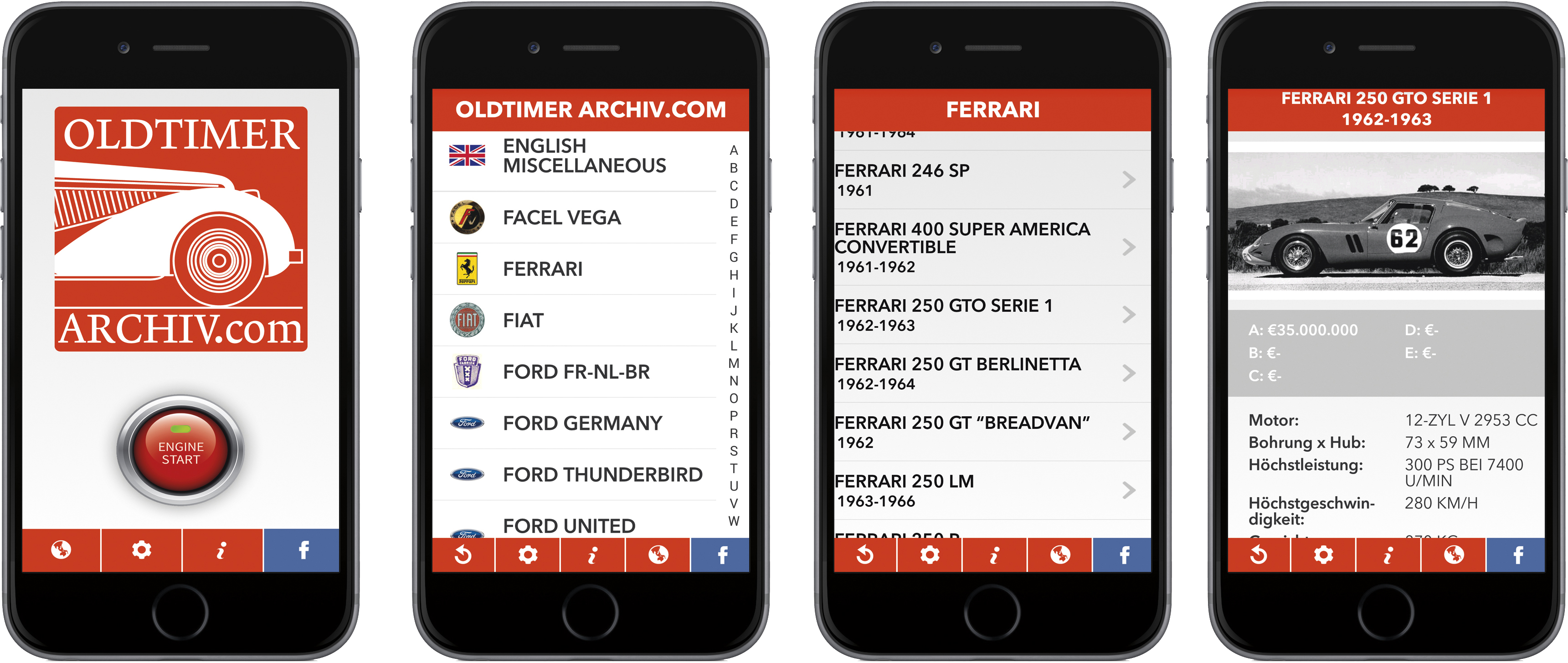 Möchten Sie die technischen Daten und / oder den aktuellen Wert aus diesem Auto?
Dann laden Sie die OldtimerArchiv.com App.
 Interessenten aus der Schweiz bestellen bitte direkt bei